If you’ve ever thought, “I probably need help… just not yet,” you’re not behind. You’re actually...
A client recently asked me to replace her cookware with non-toxic options. Her old set was a discontinued Calphalon stainless line, and she wanted the new one to match it as closely as possible. I did some research and compiled a helpful guide comparing five different brands.
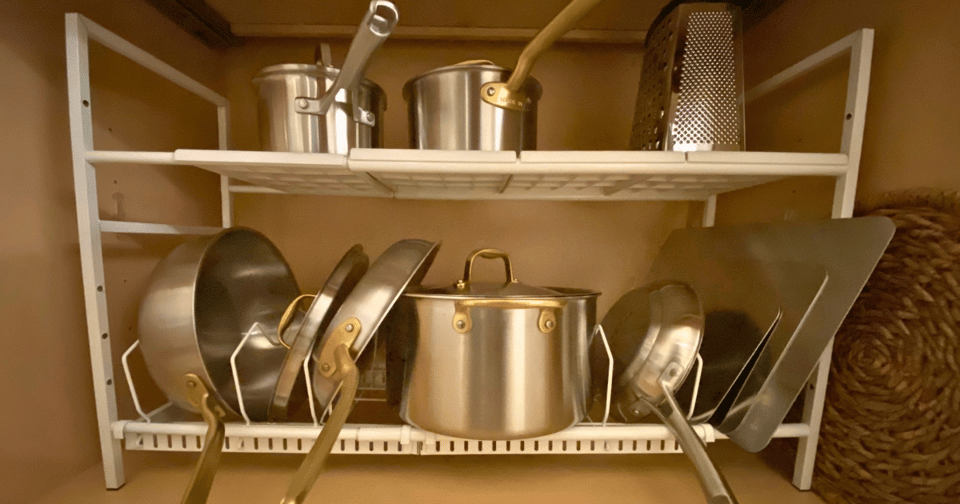
What to Look For in Non-Toxic Cookware
“Non-toxic” isn’t a regulated label, so it helps to know what to check. These are the things I compared for every brand.
- The cooking surface. Traditional nonstick gets its slickness from a coating. Stainless steel, carbon steel, and titanium cooking surfaces don’t rely on one.
- What the brand says it’s made without. Look for specific claims, like PFAS, PFOA, PTFE, lead, and cadmium. Keep in mind these are the brand’s own claims.
- Nickel. The common 18/10 stainless steel contains nickel. If that’s a concern for you, check the cooking surface before you buy.
- Construction. Most quality stainless sets are “clad,” meaning layers of metal around an aluminum core. You’ll see 3-ply and 5-ply. More layers usually means more even heat and more weight.
- Oven-safe temperature. This varies more than you’d think. Heritage Steel is rated to 800°F, while Calphalon Premier is rated to 500°F.
- Induction. If you have an induction cooktop, confirm it before anything else.
- Warranty and returns. Some brands offer a lifetime warranty, others a limited one. Several offer a trial window, which is worth a lot if you’re unsure.
- Where it’s made. If this matters to you, it’s usually listed, but sometimes only in the FAQ.
Start With What You Already Cook With
Before comparing brands, I wrote down the pieces in her existing set: a 10" skillet, a 3 qt sauté pan, a 2.5 qt saucepan, and a 6 qt pot.
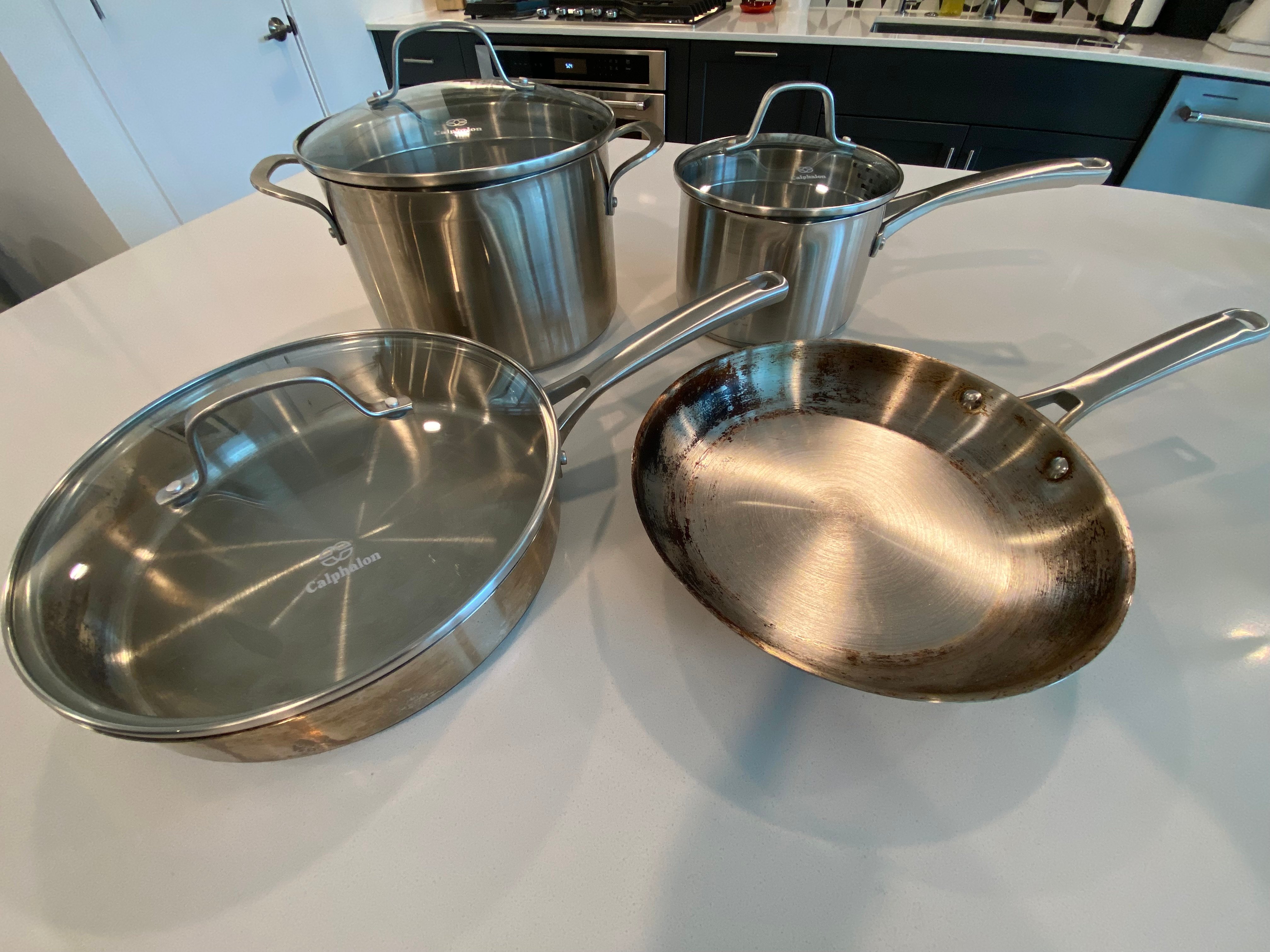
With the list, I was able to rule out plenty of sets, and it saved me a ton of research time.
Be sure to consider the lids as well. Glass or stainless? If you’re used to one, the switch is noticeable.
The Five Brands I Compared
All five use multi-layer construction with an aluminum core. The biggest differences are price, warranty, and where they’re made.
|
Brand & Set |
Construction |
Warranty & Returns |
Made In |
|---|---|---|---|
|
5-ply stainless |
10-year manufacturer warranty (via retailer) |
Imported |
|
|
5-ply stainless |
Lifetime against defects, 60-day trial |
China |
|
|
Tri-ply titanium, stainless, and aluminum |
Limited lifetime, 100-day trial |
Several countries, designed in Los Angeles |
|
|
5-ply, 18/10 stainless cooking surface |
Lifetime |
Clarksville, Tennessee, clad steel from South Korea |
|
|
5-ply stainless |
Lifetime, 60-day returns |
Italy and US |
Calphalon was the most affordable and the closest match to my client's old set, since it's the same brand. Calphalon also promotes a newer stainless line made without PFAS, PFOA, lead, and cadmium.
Misen was the next step up in price. Its 10" pan and 3 qt sauté pan were the closest sizes to her existing pieces among the non-Calphalon options.
Our Place is a different material altogether. Its titanium interior gives you a nonstick-style surface without a coating, and the set includes a large pot. Its price swings a lot depending on whether it's on sale.
Heritage Steel covered all three of her everyday pieces in slightly larger sizes. It's made in Tennessee, and it's rated oven-safe to 800°F. Both of its series contain nickel in the cooking surface.
Made In was the highest-priced set. It states its stainless pieces are made without PFAS, PFOA, PTFE, lead, cadmium, and BPA, and it comes with a lifetime warranty.
Worth Considering: A Carbon Steel Skillet
If you want a pan that releases food well with no coating at all, a carbon steel skillet is a good addition to a stainless set. It’s sold as a single pan, so it won’t replace your saucepan or pots. Both Made In and Misen make a pre-seasoned 10" version.
What it does well
- No coating; the nonstick surface comes from seasoning
- Strong searing and high-heat cooking
- Lighter than cast iron
- Works on induction
What to know first
- Hand wash only, then dry it and oil it occasionally so it doesn’t rust
- Go easy on acidic foods like tomato sauce until the seasoning builds up
- The surface darkens with use, which is normal
If the set you choose already has a nonstick-style pan, like Our Place, you probably don’t need one.
Why I Left Out All-Clad
I also considered All-Clad, since it’s the name most people expect. For stainless steel, though, its D3 line and Calphalon’s stainless lines are both clad, both carry limited warranties, and both have similar customer ratings.
The claims you’ll see about All-Clad lasting much longer usually compare it to Calphalon’s coated nonstick, not its stainless. I couldn’t find a meaningful durability difference between the stainless lines, and All-Clad costs more for comparable pieces. So it didn’t make the list.
How to Choose the Right Non-Toxic Set for Your Kitchen
In my opinion, the best non-toxic cookware is the set that matches how you cook and what you already know how to use. Decide which materials and claims matter to you and then compare warranties.
Research like this is a small part of what a personal assistant does. Instead of spending hours comparing brands herself, my client got one PDF with everything already vetted.
Brand details were checked in October 2026. Warranties, materials, and prices change, so confirm current terms on each brand's site before you buy.

If you’d like someone to handle the next one, let’s talk. Queen of To Do has provided personal assistant and home management services in Austin since 2011.